








Here's the TL;DR:
- Your total daily protein intake matters more than precisely timing your shakes.
- A pre-workout shake can help supply amino acids when you train fasted or several hours after eating.
- A post-workout shake provides convenient protein to support muscle repair and growth after training.
- Aim to distribute your protein across three to five meals or snacks throughout the day.
- Use protein timing strategically around your workouts, but prioritize consistency over chasing a perfect schedule.
When you're pushing for more strength, more muscle, and better performance, even small nutrition decisions can have an impact. One question comes up often: Should you have a protein shake before or after your workout?
A post-workout shake may better support muscle repair and growth, but hitting your daily protein target matters more than timing. If you train fasted or haven't eaten for several hours, a pre-workout protein shake can be a smart choice.
Once your nutrition strategy is dialed in, you can focus on what matters most: training with purpose and making every scoop support the work you're putting in.
Should I Drink a Protein Shake Before or After Workout?
There isn't one perfect time for every athlete. If you've eaten a protein-rich meal recently, you already have amino acids available during training, making another shake less urgent. If several hours have passed, a pre-workout shake can bridge the gap.
After training, protein gives your recovering muscles another dose of amino acids when they're ready to rebuild. Ultimately, you should choose the timing that helps you consistently meet your daily protein needs.
How Much Protein per Day Matters More Than Protein Timing
Although plenty of lifters, bodybuilders, and other athletes worry about protein shake timing, hitting your daily protein consumption target is what actually moves the needle.
Serious athletes and active individuals typically need roughly 0.7–1.0 grams of protein per pound of body weight per day to support muscle repair, lean mass retention, and consistent performance.
If you're regularly falling short on total protein, the best timing strategy in the world won't compensate. Your muscles need a steady supply of amino acids across the day, not just a single well-timed dose.
Spreading protein across three to five meals or snacks keeps muscle protein synthesis elevated longer than front-loading or back-loading your intake. Once your daily intake is dialed in, you can focus on strategic timing to give you an edge.
Benefits of Drinking Protein Shake Before a Workout
If you're training fasted or it's been more than three hours since your last meal, a pre-workout shake gives your muscles the amino acids they need before you put them under load.
Amino acids circulating in your bloodstream during training can reduce muscle protein breakdown, which is critical.
Consuming a protein shake before your workout also supports focus and sustained output. When your body isn't pulling from muscle tissue for fuel, you can push harder and maintain quality reps deeper into the session.
That's the kind of marginal gain that compounds over weeks of disciplined training.
A smaller serving of 20–25 grams works best so that you're not training with a full stomach. A fast-digesting whey protein isolate, such as Evogen's IsoJect, absorbs quickly and won't weigh you down mid-set.
Benefits of a Post-Workout Protein Shake
After training, your muscles are primed to absorb protein and begin rebuilding damaged tissue.
Getting 25–40 grams of high-quality protein within 30–60 minutes of finishing your session accelerates muscle protein synthesis and supports faster muscle repair and growth.
Pair a clean, fast-digesting whey isolate shake with a moderate carbohydrate source to replenish glycogen, and you've covered the two biggest post-training priorities in one shot.
If your goal is building lean muscle, be consistent with your post-workout shakes. Miss one occasionally, and you won't lose your gains, but making it a non-negotiable habit puts you ahead of most people training alongside you.
What Is the Best Time To Drink a Protein Shake for Muscle Growth?
To build muscle, two things are non-negotiable: adequate total protein and consistent mechanical stress on the muscle. Once those are in place, strategic timing can sharpen both performance and recovery.
For muscle growth specifically, prioritize protein both before and after training when your schedule allows.
A pre-workout serving of 20–25 grams primes your muscles with circulating amino acids. A post-workout serving of 25–40 grams capitalizes on elevated muscle protein synthesis rates.
Together, they create a protein-rich window around your training that supports maximum anabolic signaling.
Leucine content is important. You need at least 2–3 grams of leucine per serving to trigger muscle protein synthesis effectively. A high-quality whey isolate protein powder will consistently hit that threshold.
What Is the Best Time To Drink a Protein Shake for Weight Loss?
Protein and weight loss have a straightforward relationship: higher protein intake preserves lean muscle while you're in a calorie deficit, and protein is the most satiating macronutrient per calorie. So, a well-timed shake can help you stay on track.
Training in a slight deficit already puts stress on your body, and a pre-workout protein serving reduces the risk of your body pulling fuel from muscle tissue.
When to drink a protein shake during a cut really depends on your hunger cues and the amount of protein you've already consumed before your workout.
Keep the serving lean, around 20–25 grams from a clean isolate, so you're not adding unnecessary calories, and avoid shakes loaded with added sugars or excess fats during a fat loss phase.
Example Shake Timing Schedule
Timing your protein shakes doesn't need to be complicated. The schedule below gives you a practical framework you can adjust based on your training time, goals, and daily routine.
Just remember that getting enough protein each day matters more than getting every detail of your schedule perfect.
|
Timing |
When To Take It |
Protein Amount |
Best For |
|
Pre-Workout |
30–60 minutes before training |
20–25 g |
Training fasted or several hours after a meal |
|
Post-Workout |
30–60 minutes after training |
25–40 g |
Muscle recovery and growth |
|
Before Bed |
30–60 minutes before sleep |
25–30 g |
Overnight muscle recovery |
|
Rest Day |
Between meals as needed |
20–30 g |
Reaching your daily protein target |
Pre-Workout Shake Timing
Drink your pre-workout shake 30–60 minutes before training. Use a smaller serving of 20–25 grams from a fast-digesting whey isolate. If you've already eaten a protein-rich meal within the last two hours, you can skip this one without losing ground.
Post-Workout Shake Timing
Aim for 25–40 grams of protein within 30–60 minutes of finishing your session. This is the most impactful shake of the day for muscle recovery and growth. Pair it with fast-digesting carbs, such as fruit or white rice, to replenish glycogen alongside the protein.
Before Bed Shake Timing
A slower-digesting protein source before bed can support overnight muscle repair. Casein is the traditional choice here, but a blended protein supplement works well too, since it extends amino acid release over several hours.
Keep the serving at 25–30 grams, and avoid adding high-sugar mixers late at night.
Rest Day Shake Timing
On rest days, timing isn't as important. Focus on hitting your total dietary protein target across meals. If you're short by mid-afternoon, a shake between meals fills the gap cleanly.
Rest days are still recovery days, and your muscles are still rebuilding, so don't treat protein as optional just because you're not training.
When To Use IsoJect in Your Routine
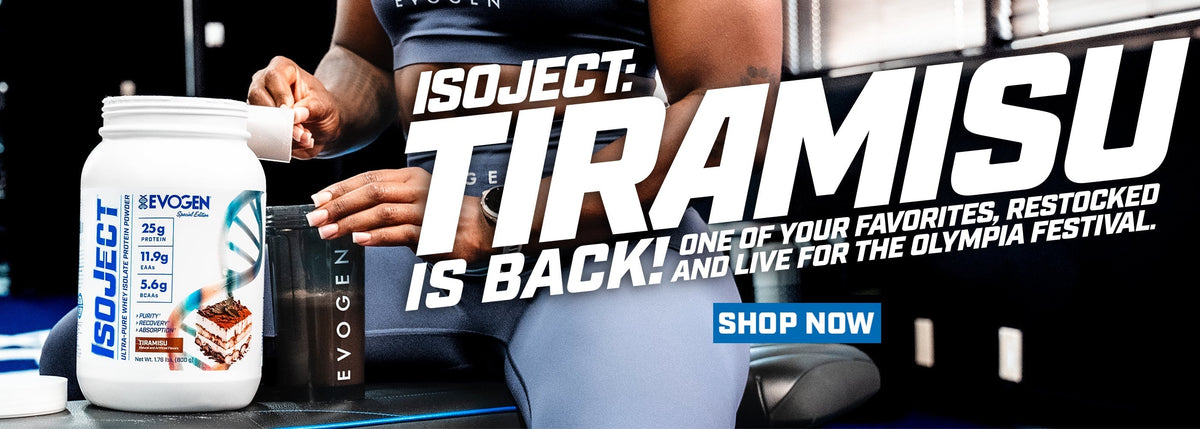
Evogen's IsoJect Whey Protein Isolate was designed by Evogen's founder, Hany Rambod, and built around one priority: to deliver clean, fast-absorbing whey protein isolate with nothing unnecessary added.
Use IsoJect as your post-workout shake when you want rapid amino acid delivery to recovering muscle tissue. It's also a solid pre-workout option if you need something light and fast-digesting before training.
For athletes focusing on lean muscle development or staying in a calorie-controlled phase, IsoJect's high protein-to-calorie ratio makes it an ideal choice.
Our triple cold-filtered IsoJect was engineered by people who live and breathe performance, and the positive customer feedback we receive speaks volumes about the quality. For instance, Nicole J., a verified Evogen customer, recently shared:
"Best protein. Tastes amazing. No stomach issues. Satisfied for hours after. Highly recommend."
Caryl T., also a verified customer, had this to say:
"Best tasting protein hands down."
Timing Your Daily Protein Intake To Fuel Your Workouts
The best protein strategy is the one you can execute relentlessly. Hit your daily target, distribute your intake intelligently, and use your pre- and post-workout nutrition to support the work you're demanding from your body.
That attention to detail is the same mindset behind the systems used by 25x Olympia-winning coach Hany Rambod.
When every meal, shake, and training session has a purpose, you're building more than a workout routine. You're building a physique with intent.
Pair IsoJect with Evogreens to round out your daily nutrition strategy. IsoJect delivers high-quality protein for muscle support, while Evogreens adds greens, superfoods, and probiotic support to help keep your nutrition as dialed in as your training.