







Here's the TL;DR:
- Creatine gummies and powder can both provide effective creatine monohydrate when dosed appropriately.
- Powder typically offers fewer added ingredients, greater dosing flexibility, and a lower cost per gram.
- Gummies provide superior convenience and taste but may require several pieces to reach a full daily dose.
- Heat and formulation conditions during gummy processing may affect creatine stability.
- For lifters who train seriously, powder is usually the better choice as it offers greater efficiency and control.
Every gram counts when you're training for your next breakthrough. So when comparing creatine gummies vs. powder, the choice comes down to more than taste and convenience.
Both can deliver creatine monohydrate, but powder typically provides a fuller dose with fewer added ingredients, greater dosing control, and a lower cost per gram, while gummies offer unmatched portability and simplicity.
For those chasing serious performance, those differences are worth considering. Whether you choose creatine monohydrate powder or gummies, commit to the habit, chase your next PR, and keep building. That's what disciplined growth is all about.
Benefits of Creatine Supplements for Performance and Muscle Growth
Research consistently shows creatine supplementation supports lean mass development and faster recovery between hard sets.
It works by increasing phosphocreatine stores in your muscles, which fuel ATP regeneration during high-intensity efforts. More ATP means more output before fatigue sets in.
For anyone training hard, that can translate to real, measurable gains, such as improvements in maximal strength, explosive power, or sprint capacity.
Note: A typical daily maintenance dose is 3–5 grams of creatine, with 5 grams being a common serving size.
What's the Difference Between Creatine Gummies and Creatine Powder?
Creatine gummies and powder both deliver creatine, typically as creatine monohydrate, but they differ in formulation, convenience, and cost.
Gummies offer better portability and taste, while powder usually provides a higher creatine content per dose with fewer added ingredients, more dosing flexibility, and a lower cost per gram of creatine.
Powder also avoids the heat processing used to form gummies, which may affect creatine stability.
For lifters who train with intent, powder is usually the better choice as it offers greater efficiency and control.
Main Differences
Both creatine gummies and powder can deliver effective creatine, but the format affects how much you take, what else comes with each serving, and how easily it fits into your routine.
If you're deciding between gummies and powder, these practical differences often matter more than the delivery format itself.
|
Factor |
Creatine Gummies |
Creatine Powder |
|
Creatine form |
Typically creatine monohydrate |
Typically creatine monohydrate |
|
Typical dose |
Often 1–1.5 grams per gummy, requiring multiple gummies for a full dose |
Typically 5 grams per serving |
|
Ingredients |
Often includes sweeteners, flavorings, pectin or gelatin, and other binding ingredients |
Often only contains creatine monohydrate |
|
Convenience |
Pre-dosed and requires no mixing |
Requires measuring and mixing |
|
Portability |
Easy to carry and take anywhere |
Portable but requires liquid and a way to mix |
|
Taste |
Usually flavored and sweet |
Available unflavored or flavored |
|
Mixing |
No mixing required |
Mixes into water, shakes, juice, or other beverages |
|
Cost per gram |
Generally higher |
Generally lower |
|
Dosing flexibility |
Requires counting gummies to adjust your dose |
Easy to adjust by measuring the desired amount |
|
Processing |
Requires heat and other processing to form the gummy matrix, which may affect creatine stability |
Requires less processing and avoids heat exposure |
|
Daily use |
Convenient for people who prioritize simplicity and taste |
Efficient for anyone who prioritizes precise dosing, fewer extras, and cost |
|
Best fit |
Travel, convenience, and people who dislike mixing powders |
Daily performance routines, precise dosing, and long-term value |
How Creatine Gummies Work
Creatine gummies deliver creatine monohydrate in a chewable, pre-dosed format. They're designed for people who want supplementation without mixing anything or carrying a tub.
You chew them, they break down in your digestive tract, and the creatine is absorbed into your bloodstream. The appeal is obvious: great taste, portability, and no prep.
The trade-off is that most gummies contain 1–1.5 grams of creatine per piece, which means you're eating three to five gummies to hit a standard maintenance dose. They also tend to include added sugars, flavorings, and binding agents.
Because creatine can degrade into creatinine under certain heat, water, and pH conditions, the processing conditions used to manufacture gummies may affect creatine stability.
How Creatine Powder Works
Creatine powder is the original, most studied form of creatine supplementation. You scoop it into water, shake or stir, and drink it.
Most powders use creatine monohydrate, the same active ingredient in gummies, and deliver a full 5-gram dose in a single scoop with no added sugars or binders.
Powder dissolves best in warm or room-temperature water, and fine-milled micronized versions mix more cleanly. Because it's a single-ingredient product in most cases, you get a high concentration of creatine per serving with minimal extras.
Powder also stacks easily with pre-workouts, protein shakes, or other beverages, which makes it practical for people who already have a supplement routine.
You need water and a few seconds to mix it, but that's a minor inconvenience that becomes a non-issue once it's part of your daily habit.
Creatine Gummies vs. Powder: Effectiveness
When both products provide an equivalent dose of stable creatine monohydrate, their ability to support strength, power, training volume, and muscle growth is fundamentally similar. The bigger difference is how reliably you receive that dose.
Powder typically delivers a full 5-gram serving with minimal ingredients, while gummies may require several pieces and can introduce added sugars and processing variables that affect creatine stability.
For those focused on performance and sustained gains, powder offers more predictable daily dosing.
Creatine Powder vs. Gummies: Absorption Rates
Once absorbed, creatine from gummies and powder follows the same physiological pathway and contributes to replenishing muscle phosphocreatine stores.
Powder may have a practical advantage because it can be dispersed in liquid immediately before consumption and typically contains fewer ingredients that must be digested.
Gummies can still deliver effective creatine, provided they contain a stable, adequately dosed form. Processing deserves consideration, since heat and formulation conditions may affect creatine stability before you consume it.
Overall, the more relevant considerations are formulation, dose, digestion, and how consistently you take it.
Factors Affecting Absorption
Several variables can influence how efficiently creatine is absorbed and retained by muscle tissue.
- Hydration: Adequate fluid intake supports normal creatine transport and muscle hydration.
- Formulation: Particle size, processing, and other ingredients can influence how readily creatine dissolves and becomes available for absorption.
- Digestion: Powder mixed with liquid avoids the need to break down a gummy matrix before the creatine becomes available.
Creatine Gummies vs. Powder: Dosing Accuracy and Convenience
With powder, you scoop and measure. A standard serving is one level scoop, which typically provides 5 grams of creatine, and you know exactly what you're getting, so the risk of underdosing is minimal.
Creatine gummies offer more convenience, but they require more attention. Most contain 1–1.5 grams of creatine per gummy, so hitting 5 grams means eating three to five pieces.
That's manageable, but it adds up in cost and sugar. If you're in a cut and tracking every gram, four or five gummies a day is sugar you have to account for. And if you don't read the label closely, it's easy to underdose without realizing it.
Creatine Monohydrate Gummies vs. Powder: Cost-Effectiveness
The price difference between creatine gummies and powder might seem negligible at first glance until you examine the cost per gram of creatine.
A tub of creatine powder typically runs about $20 to $55 and often covers 60 or more 5-gram servings. Gummies often land in a similar price range, but because many provide only 1 to 1.5 grams per piece, a single bottle may cover far fewer full daily doses.
Container prices vary widely, but powder generally delivers significantly more creatine for the money. Comparing cost per gram rather than the sticker price gives a clearer picture of long-term value.
Over months of supplementing daily, the difference becomes substantial. If you're comparing on value, powder wins this category.
Which Is Better for Beginners, Creatine Gummies or Creatine Powder?
If you're new to daily creatine supplementation, the best format is whichever one you'll actually take every day. Consistency over weeks and months is what drives results, not which form you use on any given day.
For beginners already comfortable with pre-workout mixes or protein shakes, powder is a smart starting point. You'll get precise 5-gram doses, no added sugar, and a lower cost per serving from day one.
That said, gummies work well for beginners who are still building their supplement routine. They require no preparation and taste good, so gummies may help you establish a routine, but the higher cost of gummies compared to powder is still worth considering.
Once daily dosing becomes a habit and you want better control over your intake, you can transition to powder.
What Are the Best Ways To Take Creatine Powder vs. Gummies for Maximum Absorption?
For powder, mix one 5-gram scoop into roughly 8–12 oz of water, using room-temperature or warm liquid for easier dissolution. Creatine can also be added to a protein shake or other beverage. Stir or shake thoroughly and drink soon after mixing.
Micronized creatine powder blends more smoothly than standard creatine, so it won't clump or leave grit at the bottom of your shaker.
Gummies require no mixing, making them convenient for travel or busy days. The timing of your creatine dose is flexible; take it pre-workout, post-workout, or with a meal. With either format, consistent daily use matters more than precise timing.
Why We Built Our Creatine Monohydrate the Way We Did
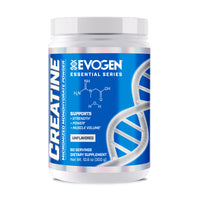
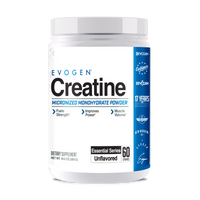
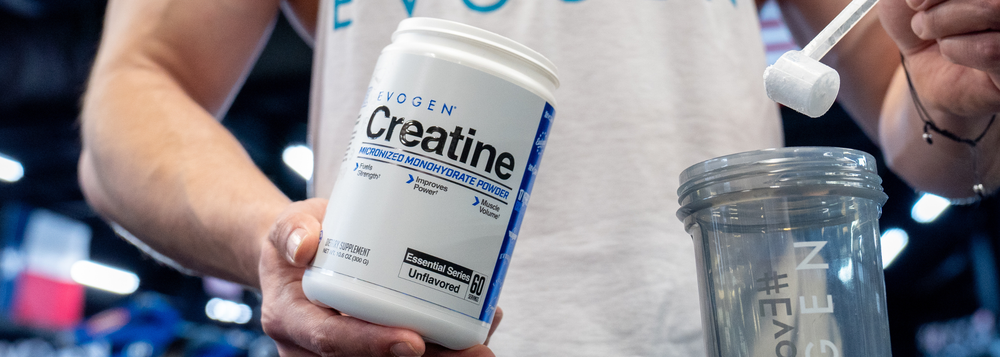
We wanted a creatine that does one job well. Our Creatine Monohydrate uses micronized creatine monohydrate, and the unflavored version is just that: no fillers, no proprietary blend, nothing extra. If plain creatine isn't your thing, it also comes in Blue Raspberry Blast and Watermelon, so you don't have to choose between taste and a full dose.
Every scoop delivers a precise 5 grams, so your daily intake stays consistent. Because it's micronized, it mixes cleanly into water or your pre-workout. One customer said it "dissolves easily" and helps them perform better during workouts. Another said it "doesn't mess with stomach like some do," which matters if you've had issues with other creatine powders.
It's also NSF Certified for Sport, meaning it's independently tested for banned substances and label accuracy. If you compete and may face drug testing, that certification counts.
For those focused on disciplined growth and elite performance, this creatine earns its place in your daily stack. Customer feedback speaks volumes. For instance, Dave E. recently shared this:
"Great stuff. Doesn’t mess with stomach like some do."
Berna S. had this to say:
"I really liked this creatine. It dissolves easily, tastes good, and helps me perform better during my workouts. I would definitely buy it again!"
Creatine Gummies vs. Powder: The Difference Matters
The best supplement routine is one you can execute without friction, day after day, while keeping quality and dosing under control. When you take your training seriously, those details compound over months and years.
That performance-first philosophy is a hallmark of Evogen, from the formulas developed under founder and 25x Olympia-winning coach Hany Rambod to the standards behind every product.
Choose the format that supports your routine, and then stay relentlessly consistent.
Hard training demands more than a single supplement, especially when a demanding diet makes it difficult to consistently cover your nutritional bases. Evogreens combines organic greens, superfoods, and probiotics in a convenient daily powder designed to help fill those gaps.