












Here's the TL;DR:
- Ashwagandha may support sleep by helping regulate stress-related pathways that can interfere with winding down at night.
- Its potential sleep benefits may be especially relevant when stress contributes to poor sleep or difficulty falling asleep.
- Standardized extracts provide consistent withanolide content for precise dosing.
- Timing, dose, individual response, and potential medication or health-condition interactions should be considered before taking ashwagandha.
- Better sleep supports the recovery, performance, and consistency required to keep pushing toward your training goals.
You crush late sessions, but your brain keeps sprinting when it's time to sleep. Sound familiar? Ashwagandha is a popular adaptogen that may help you hit the brakes.
Ashwagandha (Withania somnifera) may help support sleep by influencing stress-related pathways, lowering perceived stress, and promoting a calmer state, potentially making it easier to fall asleep and maintain quality rest.
When you're chasing bigger lifts, harder sessions, and sustained progress, sleep deserves the same precision you bring to training and nutrition.
How Does Ashwagandha Work in the Body To Help With Sleep?
Ashwagandha, sometimes called winter cherry or Indian ginseng, is an herbal supplement that has traditionally been used in Ayurvedic medicine as an adaptogen.
Ashwagandha root extract isn't a sedative. Rather, it may help address stress-related factors that can contribute to difficulty winding down, such as elevated cortisol, a nervous system still running hot, and disrupted sleep architecture from chronic training stress.
A 2020 study found that 300 mg of KSM-66 ashwagandha taken twice daily for six weeks significantly improved self-reported sleep quality, sleep efficiency, sleep latency, and total sleep time compared to a placebo.
Improvements like these matter for athletes who need to recover well and perform consistently.
Lowering Cortisol and Stress
Cortisol is one of several factors that can influence sleep after hard training. Your body reads intense exercise as a stressor, and cortisol spikes accordingly.
During training, that's a normal part of the adaptation process, but at night, elevated cortisol may keep your brain alert when it should be winding down.
Ashwagandha extract is thought to work by modulating your hypothalamic-pituitary-adrenal (HPA) axis, the system that governs cortisol output.
One placebo-controlled study found that ashwagandha root extract at a dose of 300 mg twice daily for 60 days reduced serum cortisol levels by an average of 27.9% among participants. That reduction creates the conditions for deeper, less fragmented sleep.
Promoting Relaxation
Aside from cortisol, ashwagandha appears to interact with GABA receptors in the brain, the same pathways that calm neural activity.
Withanolides, the active compounds in the root, may influence GABAergic signaling, which may explain why many people report feeling noticeably calmer after taking it consistently.
Some people stack ashwagandha with L-theanine (100–200 mg) with the hope of amplifying this effect without adding sedation, as both work through complementary pathways.
Regulating Sleep Cycles
Ashwagandha doesn't just help with falling asleep faster. It may also improve the quality of your sleep.
Research suggests that ashwagandha might increase time spent in slow-wave sleep, i.e., the deep, restorative stage where growth hormone is released and tissue repair accelerates. For athletes, that's where the real recovery happens.
Shoden, a highly concentrated ashwagandha extract dosed at just 60–120 mg, has shown significant improvements in sleep efficiency scores in clinical data. For those with high stress and anxiety, this form may be worth considering.
How Does Ashwagandha Help Athletes Sleep Better and Recover Faster?
Ashwagandha may support sleep and recovery by influencing several systems involved in the body's response to stress. Its effects appear to involve HPA-axis signaling, GABAergic activity, and other pathways involved in nervous-system regulation.
For athletes, this may help shift the body toward a physiological state more compatible with sustained sleep and overnight recovery.
Benefits of Better Sleep Quality for Recovery
Sleep is when your body rebuilds. Muscle protein synthesis is influenced heavily by protein intake, amino acid availability, resistance exercise, and the overall recovery period, but it tends to peak, along with growth hormone secretion, during slow-wave sleep.
Cut into that, and you slow the repair process that your hard sessions are designed to trigger.
Consistent, quality sleep also restores glycogen more efficiently, reduces systemic inflammation, and resets immune function.
Athletes who fail to get a full night's rest may have slower reaction times, higher injury risk, and reduced maximal strength output the following day. Those are direct performance liabilities.
Ashwagandha's potential ability to improve sleep depth and reduce nighttime cortisol may help you sleep longer and sleep in a way that actually supports the physical adaptations you're training for.
Impact of Better Sleep on Performance
For athletes, the sleep-performance connection runs through multiple channels.
- Lower cortisol means better testosterone-to-cortisol ratios, which support recovery and performance.
- Improved slow-wave sleep can mean more growth hormone, faster tissue repair, and sharper neuromuscular coordination.
- Better sleep also improves glucose metabolism, which directly affects your energy availability during training.
If you're using a pre-workout like EVP Xtreme N.O. and expecting it to carry you through sessions when you're running on four or five hours of broken sleep, you're asking a lot from stimulants that can only do so much.
Additional Health and Wellness Benefits of Ashwagandha for Athletes
Ashwagandha has also been studied for several other potential health and performance benefits, although the evidence varies considerably by outcome.
More research is needed to determine which effects are reliable, who may benefit, and what doses are appropriate.
Possible benefits may include:
- Improved testosterone levels and sperm quality.
- Enhanced cognitive function.
- Reduced inflammation.
- Improved joint health.
Can I Take Ashwagandha for Sleep if I Train Hard in the Evening?
Evening training creates a specific challenge: your cortisol and adrenaline are still elevated when you should be shifting into recovery mode.
Taking ashwagandha after your evening session may help bring down stress markers and help you relax before bed.
Most people feel a gradual shift toward calmness rather than sudden drowsiness, which is actually ideal if you still need to eat, stretch, or wind down before sleep.
Pairing it with magnesium glycinate (200–400 mg) after an evening session may lead to better muscle relaxation and nervous system recovery.
Adding Ashwagandha to Your Fitness Routine
Ashwagandha can fit into a well-structured fitness routine when its form, dose, timing, and potential interactions are considered carefully.
For athletes, the goal is to make supplementation consistent and intentional rather than adding another variable to an already complex recovery strategy.
Recommended Forms and Dosage
Standardized extracts can make dosing more consistent because their withanolide content is controlled. Non-standardized root powders can vary in their withanolide content, making comparisons between products and doses less predictable.
Stick with one of these clinically studied forms:
- KSM-66 (300–600 mg)
- Sensoril (120–250 mg)
- Shoden (60–120 mg)
Don't stack multiple adaptogens without understanding how they interact.
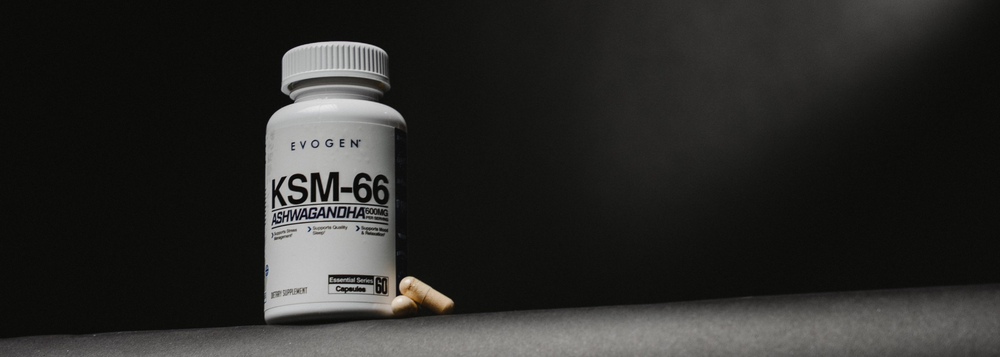
If you're looking for a premium ashwagandha supplement, try Evogen's KSM-66 Ashwagandha. Each vegetarian capsule delivers 600 mg of KSM-66 ashwagandha to promote calm focus, quality sleep, and steady energy levels.
Customer reviews speak for themselves. Scott S., a satisfied Evogen customer, recently shared this:
"I love this Ashwagandha! It helps keep me calm and focused. I take it daily with my multi. The KSM-66 is the version I prefer. Another home run by Evogen!"
Randy had this to say:
"Ever since I've been taking this I've been getting the best sleep ever. Wake up feeling great in the morning. Sleep all night."
If you want brand-consistent stacking, check Evogen Nutrition's full product lineup. Building your recovery stack around a single trusted brand keeps your protocol clean and intentional.
Best Time To Take Ashwagandha for Sleep
The best time to take ashwagandha for sleep is 60–90 minutes before you want to be asleep. This gives the active compounds enough time to take effect so you're not lying awake waiting for something to happen.
- If you train in the morning or afternoon, taking ashwagandha in the evening is straightforward; just build it into your pre-bed routine.
- If you train at night, take it after training.
Some people split their dose, taking a smaller dose in the morning for stress management and a larger dose at night for sleep support. This ashwagandha dosing strategy works well if you're taking a total of 300–600 mg of KSM-66 daily.
Consistency matters more than timing, as ashwagandha's effects build over several weeks of regular use.
Safety and Side Effects
Ashwagandha appears to be well tolerated by most healthy people, and adverse effects are generally mild.
Some people may experience GI discomfort. Taking it with a small amount of food or a protein shake may improve tolerability.
Ashwagandha is not recommended if you're pregnant or breastfeeding. Consult your doctor before taking ashwagandha if you have a thyroid or autoimmune condition or are taking immunosuppressants or sedative medications.
Using Ashwagandha To Support Sustained Growth
Taking ashwagandha for sleep is a practical option for athletes who train hard and struggle to recover fully.
It may help address the cortisol-driven wakefulness that late sessions and accumulated stress create, may improve sleep depth, and doesn't carry the dependency risk associated with some pharmaceutical sleep aids.
The evidence is promising, the dosing is clear, and the integration into a pre-bed stack is simple.
If you're serious about elite performance and disciplined growth, sleep has to be part of the plan, not an afterthought. Use a standardized extract, be consistent, and build your nighttime recovery routine with the same intentionality you bring to your training.
As Hany Rambod, Evogen's founder and 25x Olympia-winning coach, often reminds us, our personal best doesn't happen in the gym alone; it happens in the hours we spend recovering.
Supporting recovery goes beyond sleep. Omega-3 fatty acids can complement a well-rounded approach to training, nutrition, and overall wellness. Evogen's Omega Fish Oil delivers concentrated EPA and DHA to support cardiovascular health, healthy inflammation management, and everyday recovery.