









Updated: June 2026
Here's the TL;DR:
- Stretching alone won't build significant muscle, but it can support hypertrophy when paired with resistance training.
- Training muscles at longer lengths may create a stronger growth stimulus than short-range training.
- Loaded stretching combines resistance and a deep stretch, making it more effective for muscle growth than passive stretching.
- Dynamic stretching is best before workouts, while static stretching is generally better after training.
- Post-workout stretching won't hurt muscle gains and may complement recovery, mobility, and long-term performance.
Does stretching actually help muscle growth, or does it only improve flexibility? Stretching alone won't add much muscle mass, but stretching performed alongside resistance training may support gains in muscle strength and size by increasing tension at longer muscle lengths and improving exercise performance.
For years, stretching was viewed primarily as a flexibility practice, but new interest in lengthened training has changed how many athletes approach it.
From loaded stretching to post-workout recovery, understanding when and how to stretch can help you maximize results, train more effectively, and potentially build muscle more efficiently.
Does Stretching Build Muscle?
We all know that stretching is beneficial, particularly after a strenuous workout, but does stretching muscles make them stronger?
Stretching alone isn't likely to build strength or increase muscle growth, but stretching performed alongside resistance training may support muscle hypertrophy by exposing muscles to greater tension at longer lengths, improving exercise execution, stretching fascia, and helping lifters train through a fuller range of motion.
Research increasingly suggests that muscles challenged while lengthened may experience greater growth than those trained primarily in shortened positions.
When To Stretch for Best Gains
Timing your stretching exercises around workouts matters for both performance and hypertrophy. The wrong approach can hurt your lifts. The right approach supports them.
Stretching Before vs. After Workout for Muscle Gains
While good for flexibility and range of motion, static stretching before lifting reduces power output. Multiple studies confirm this.
Holding a stretch for long periods before heavy sets weakens the stretch reflex and temporarily reduces force production. Save your static holds for later.
Dynamic stretching works better pre-workout. Leg swings, arm circles, and bodyweight movements prime your joints and activate target muscles without reducing strength. A five-minute dynamic warm-up prepares your body for heavy loads.
Does Stretching After a Workout Prevent Muscle Growth?
No. Post-workout static stretching does not harm gains. It may even help by improving blood flow and reducing stiffness. The key is keeping intensity moderate. You want gentle tension, not aggressive pulling that causes pain.
Does Stretching After a Workout Help Muscle Growth?
Yes, stretching after a workout may help build or maintain muscle mass by exposing trained muscles to additional tension while they're already fatigued and engorged with blood.
This combination is believed to enhance stretch-mediated hypertrophy, particularly when muscles are challenged at longer lengths.
Some physique-focused training systems, such as FST-7, also use post-workout stretching to promote fascial expansion and create a greater potential environment for muscle growth.
While the effect can be modest, it can complement a well-designed resistance training program.
Any potential benefits from post-workout stretching will always be secondary to the fundamentals of hypertrophy, including progressive overload, adequate protein intake, and evidence-based supplements such as creatine monohydrate.
Boosting Your Post-Workout Strategy
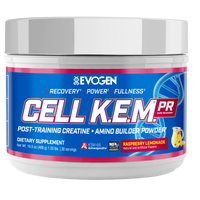
For post-workout recovery, Evogen's Cell K.E.M. PR delivers 5 grams of creatine plus EAAs to drive nutrients into muscles after fascia-stretching work.
The reviews we get for Cell K.E.M. speak for themselves. Here's what Ruby D., a verified customer, recently said:
"Solid choice for anyone looking to maximize post-workout recovery and support lean muscle growth. It’s dependable, effective, and fits seamlessly into a structured training program."
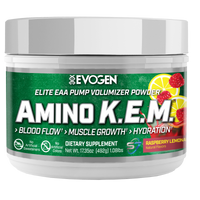
Amino K.E.M. EAA is an excellent choice as well, as it provides the full spectrum of EAAs and BCAAs plus nitric oxide and hydration for faster repair.
Loaded Stretching and Hypertrophy
Loaded stretching takes traditional flexibility work and adds resistance. This combination creates unique mechanical tension that can stimulate muscle growth beyond what either method achieves alone.
What Is Loaded Stretching?
Loaded stretching means holding a stretched position while supporting weight.
Picture a dumbbell fly where you pause at the bottom with arms wide, chest fully stretched, and a moderate load pulling your muscles long. Or imagine standing on a step with heels dropped below your toes, holding dumbbells while your calves stretch under tension.
The stretch isn't passive. Your muscles must work to control the weight while lengthened. This creates a different stimulus than either a regular stretch or a standard rep.
Research suggests that training muscles at long lengths produces greater hypertrophy than short-length training. This is likely due to increased muscle tension while stretching, which may trigger more growth signals.
The loaded stretching benefits include both flexibility gains and potential muscle thickness increases.
Does Loaded Stretching Build Muscle Mass?
Adding loaded stretches to a resistance training program is thought to enhance results compared to training alone. The stretch itself doesn't replace your lifts. It adds to them.
When you stretch a pumped muscle, you push nutrient-rich blood deeper into the tissue.
This increased cellular swelling may help deliver oxygen, amino acids, glucose, and other nutrients needed for muscle recovery and growth while creating mechanical tension within the muscle fibers themselves.
The resulting combination of enhanced nutrient delivery, metabolic stress, and fascia expansion is believed to contribute to an environment that supports muscle hypertrophy.
Muscle thickness improvements from loaded stretching appear most significant in muscles that respond well to stretch-mediated hypertrophy. Calves, chest, and lats seem to benefit most.
For enhanced blood flow during loaded stretches, consider Evogen's non-stimulating EVP 3D or high-stim EVP Xtreme N.O. as your pre-workout. Better pumps mean more pressure on the fascia and potentially greater stretch-mediated growth signals.
Loaded Stretching vs. Long-Duration Stretching
Loaded stretching and long-duration static stretching both place muscles in a lengthened position, but loaded stretching adds resistance while long-duration stretching is typically passive.
For physique-focused athletes, loaded stretching appears more effective for muscle growth because it combines mechanical tension with a deep stretch.
Long-duration stretching may improve flexibility, but it generally provides a weaker hypertrophy stimulus than resistance-based methods.
Stretching To Support Muscle Growth
Stretching doesn't replace hard training, but it has the potential to make an effective muscle-building program even more effective.
Whether through improved mobility, better exercise execution, or the ability to train muscles under greater tension, a smart stretching program can complement your pursuit of muscle growth.
That's one reason many elite physique athletes continue to prioritize stretching and muscle control alongside strength work.
As Hany Rambod, Evogen founder and "The Pro Creator," has long emphasized, success comes from maximizing every aspect of performance, not just adding more weight to the bar.
Maximizing muscle growth requires more than just training harder. It requires supporting your body between workouts.
After you stretch and train, fast-absorbing protein paired with carbs helps rebuild tissue while it's primed to recover. Evogen's IsoJect Whey Protein Isolate fits perfectly here.